WATER TESTING
Water testing for pools and hot tubs: bring a sample, leave with a plan
Bring a sample to the counter. We read pH, chlorine, alkalinity, calcium hardness and cyanuric acid, then tell you what to add.
Chapter 01
How to take a water sample that tests true
Take the sample from about 12 inches below the surface. Water right at the top picks up sunscreen, pollen and whatever the skimmer hasn't caught yet, and it reads differently from the body of the pool. Turn a clean container upside down, push it down to elbow depth, and turn it right side up there.
Cap it, keep it out of the sun, and bring it to the counter at the showroom on Highway 6 in College Station. Fresher is better, since chlorine readings fall as a sample sits.
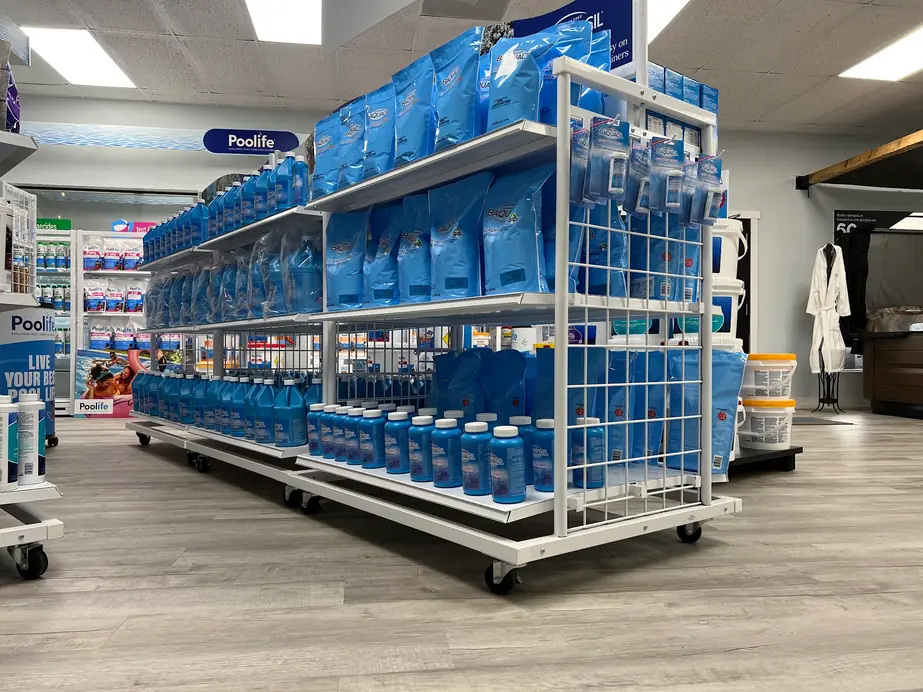
The Baquacil and Poolife water care aisle in the Brazos Valley Pools & Spas store
The numbers we read, and the ranges they should land in
We test pH, chlorine, both free and total, total alkalinity, calcium hardness and cyanuric acid, and we check for metals and bacteria when the water calls for it. The target ranges are pH 7.2 to 7.8, alkalinity 80 to 120 ppm, calcium hardness 200 to 400 ppm and cyanuric acid 30 to 50 ppm.
Those readings lean on each other. Alkalinity holds pH in place, pH decides how hard your chlorine works, and cyanuric acid keeps that chlorine alive in the sun. Fixing the wrong number first is how a pool ends up chasing itself, which is why the whole set gets read together.
Chapter 03
What the recommendation looks like, and when to retest
You get a plain answer: which readings are in range, which are not, and what to add. Follow the order you're given, because some balancers change others and pouring them in together can undo the work.
Then we tell you when to retest. After a big correction it's worth another check once the water has circulated, and after that, regular testing catches drift before the water shows it. Call the showroom at (979) 693-8533 if you'd rather talk it through.
Veteran-owned on Highway 6 since 1987 · Bring your sample to the College Station counter
Target ranges at a glance
| Reading | Target | Why it matters |
|---|---|---|
| pH | 7.2 to 7.8 | The number that decides how well your sanitizer works and how the water feels on skin and eyes. |
| Free and total chlorine | Read as a pair | The gap between free and total chlorine shows how much sanitizer is tied up and no longer working. |
| Total alkalinity | 80 to 120 ppm | Holds pH steady so it doesn't swing after every rain or refill. |
| Calcium hardness | 200 to 400 ppm | Too low and water pulls minerals from plaster and equipment. Too high and scale forms. |
| Cyanuric acid | 30 to 50 ppm | Shields chlorine from Texas sun so it lasts through the afternoon. |
| Metals and bacteria | When needed | Checked when stains, tinted water or a stubborn problem points that way. |
Once you know what to add, you can pick it up in the store or have it delivered with our chemical delivery service. For a pool that keeps drifting, a weekly maintenance plan takes the testing off your list.